Stop Reinventing the Wheel: Build Systems That Scale
Stop Reinventing the Wheel: Build Systems That Scale
By Willie Finklin, CFRE, The Grant GOAT
Have you ever found yourself creating the same document over and over again?
Writing the same email.
Answering the same questions.
Rebuilding the same spreadsheet.
Looking for the same files.
Training every new volunteer from scratch.
If so, you're not alone.
Many nonprofits operate this way because they're focused on getting through today's workload. When you're trying to serve clients, raise money, manage staff, recruit volunteers, and keep programs running, it's easy to handle each situation as it comes rather than taking time to build a better process.
The problem is that every time you reinvent the wheel, you're spending valuable time solving a problem you've already solved before.
That approach may seem manageable when your nonprofit is small, but as your organization grows, inefficiency grows with it. What once took a few extra minutes eventually becomes hours of unnecessary work each week. Those hours add up to lost productivity, increased frustration, and missed opportunities to focus on your mission.
The nonprofits that continue growing aren't necessarily the ones with the largest budgets or the biggest staff.
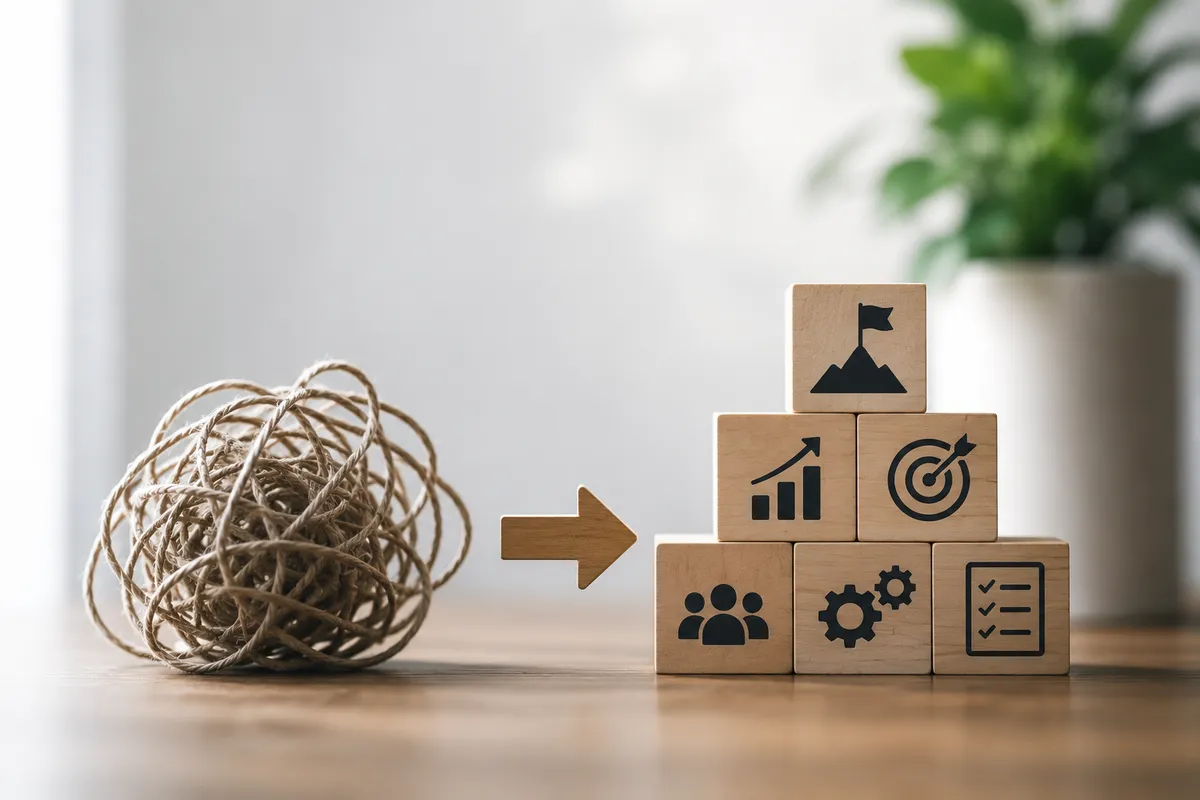
They're often the organizations that have built systems allowing them to work smarter instead of harder.
1. Systems Create Consistency
Imagine two different staff members responding to the same donor inquiry.
One provides detailed information within a few hours.
The other forgets to follow up for several days.
Neither person intended to create an inconsistent experience, but without a defined process, everyone handles situations differently.
Systems create consistency.
Whether it's onboarding a new employee, processing donations, managing volunteers, or preparing board meetings, documented procedures help ensure that important tasks are completed the same way every time.
Consistency builds trust.
It helps donors receive timely communication, volunteers understand expectations, staff know their responsibilities, and community partners experience professionalism at every interaction.
Good systems don't remove the human element.
They simply provide a reliable framework that supports excellent service.
2. Document What You Do While You're Doing It
One of the biggest mistakes organizations make is waiting until they have plenty of time to document their procedures.
Here's the reality.
That perfect time rarely arrives.
Instead, develop the habit of documenting processes as you're completing them.
If you've created a grant application checklist, save it.
If you've developed an event planning timeline, keep it for future events.
If you've written instructions for entering donor information into your database, store those instructions where everyone can find them.
Small pieces of documentation eventually become an operations manual that saves countless hours in the future.
You don't have to build every system overnight.
You simply have to stop starting from scratch every time.
3. Build Systems That Anyone Can Follow
One warning sign that a nonprofit lacks effective systems is when everyone depends on one person for answers.
Only one staff member knows how to submit reimbursement requests.
Only one volunteer understands the event registration process.
Only the Executive Director knows where important files are stored.
That's not organizational strength.
That's organizational risk.
Strong systems are designed so that someone else can step in and continue the work when needed. Clear checklists, written procedures, shared file storage, templates, and standardized workflows reduce confusion while making the organization more resilient.
If your nonprofit can only function because one person remembers everything, you're depending on memory instead of systems.
Organizations scale through documentation, not dependency.
4. Technology Should Simplify the Work, Not Complicate It
Technology has transformed how nonprofits operate, but more technology doesn't automatically mean greater efficiency.
Some organizations have accumulated multiple software platforms that don't communicate with one another. Staff end up entering the same information into several different systems, creating more work instead of less.
Before adding another tool, ask whether it truly improves your workflow.
Does it eliminate repetitive tasks?
Does it improve communication?
Does it reduce errors?
Does it save meaningful time?
The best technology supports your systems.
It doesn't replace the need for them.
Simple, well-integrated tools are often far more valuable than complicated systems that no one fully understands.
5. Build for the Organization You Want to Become
Many nonprofit leaders postpone creating systems because they think their organization isn't large enough yet.
"We'll do that once we hire more staff."
"We'll create policies when we grow."
"We'll organize our files later."
The challenge is that growth usually exposes weaknesses rather than fixing them.
If your organization struggles with communication, documentation, or workflow today, those problems often become more noticeable as additional staff, volunteers, and programs are added.
Build systems for where you're going, not just where you are today.
Creating scalable processes now allows future growth to happen much more smoothly because the foundation is already in place.
Preparation always costs less than correction.
6. Systems Create Freedom
Some people hear the word "systems" and immediately think of bureaucracy.
They imagine unnecessary paperwork, complicated procedures, and rigid rules.
Healthy systems are exactly the opposite.
They create freedom.
When routine tasks have clear processes, leaders spend less time answering repetitive questions and more time focusing on strategy. Staff gain confidence because they understand expectations. Volunteers become productive more quickly. Board members receive consistent information. Donors experience reliable stewardship.
Instead of constantly putting out fires, leaders have time to build partnerships, strengthen fundraising, improve programs, and think about the future.
That's what scalable organizations look like.
They aren't overwhelmed by growth.
They're prepared for it.
Final Thoughts: Great Organizations Don't Depend on Memory
If your nonprofit has to figure out the same process every time a task comes up, you're wasting one of your most valuable resources.
Time.
Every hour spent recreating documents, answering repetitive questions, searching for information, or solving the same problems is an hour that could have been invested in advancing your mission.
Systems aren't about making your organization feel corporate.
They're about making your organization more effective.
The stronger your systems become, the easier it becomes to onboard new people, expand programs, improve donor relationships, manage growth, and respond to new opportunities with confidence.
At PM3 University, we believe sustainable nonprofits are built on more than passion and hard work. They're built on systems that allow leaders, staff, volunteers, and boards to operate efficiently while staying focused on the mission that matters most. When you stop reinventing the wheel, you create space for innovation, growth, and greater community impact.
Because organizations don't scale through good intentions.
They scale through great systems.